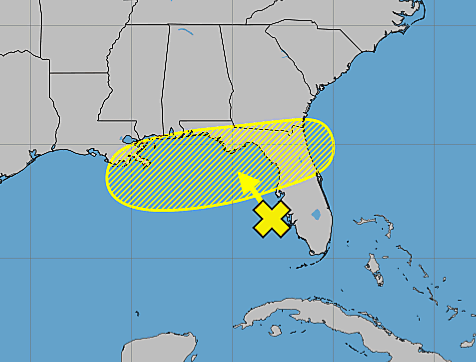
NOAA National Hurricane Center Tropical Weather Outlook at 8:00 AM Eastern Daylight Time on Friday, July 17, 2026,
MIAMI, Florida – NOAA‘s National Hurricane Center in Miami, Florida, issued a Tropical Weather Outlook at 2:00 PM Eastern Daylight Time on Friday, July 17, 2026, due to the presence of a disturbance that may form into a tropical cyclone somewhere between Louisiana and Florida.
In the Northern Gulf of America and near Florida, a large area of showers and thunderstorms over the eastern Gulf of America is associated with an upper-level low and a surface trough.
NHC forecasters say that some gradual development of this system is possible while it meanders northward, bringing heavy rain to portions of the Florida west coast during the next several days.
This system has a 10% chance of tropical cyclone formation within the next 48 hours and a 30% chance within the next 7 days.
Meanwhile, in the Eastern Tropical Atlantic, a broad area of low pressure associated with a tropical wave is located near the southern Cabo Verde Islands.
This low continues to produce a limited and disorganized area of showers and thunderstorms while it moves west-northwestward at 10 to 15 mph.
NHC forecasters say that significant development of this system is not expected before environmental conditions become even less favorable over the weekend.
Regardless of development, this system will likely produce some gusty winds and locally heavy rain over the southern Cabo Verde Islands over the next several hours.
This system has a 10% chance of tropical cyclone formation within the next 48 hours and a 10% chance within the next 7 days.
If either system develops into a tropical storm or hurricane, the next name on the 2026 Atlantic Hurricane List is Bertha.
NOAA forecasts a “below-normal” 2026 Atlantic Hurricane Season, which runs from June 1 through November 30.
Although peak hurricane season isn’t until September, hurricane and tropical storm activity is possible throughout July and typically increases as the season progresses toward its climatological peak in mid-September, according to NOAA and the National Weather Service‘s historical hurricane activity data.
Copyright 2023-2025 FloridaWord.com