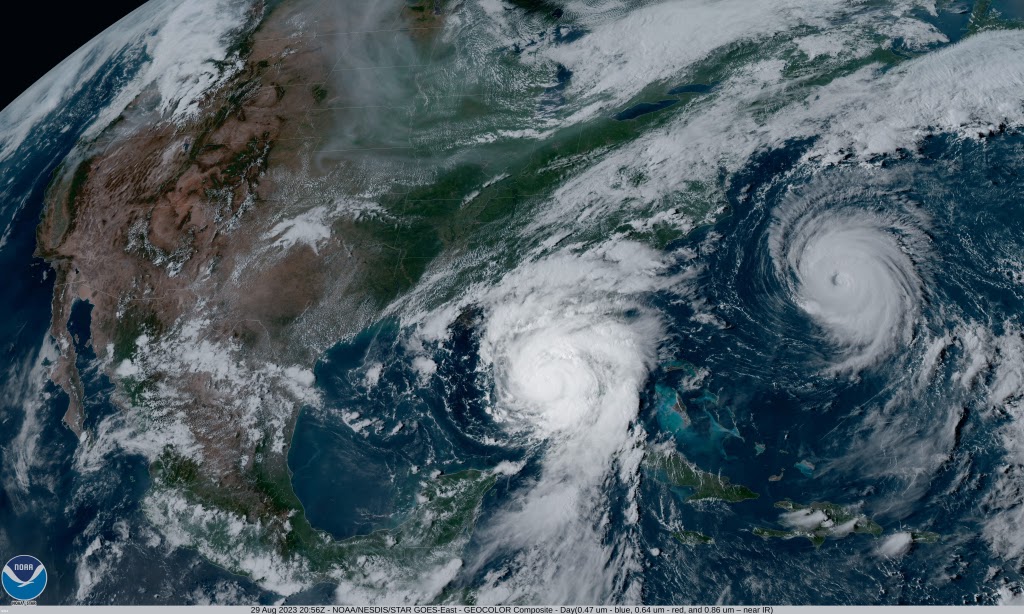
NOAA's GOES-16 satellite captured Hurricane Idalia approaching the western coast of Florida while Hurricane Franklin churned in the Atlantic Ocean at 5:01 p.m. EDT on August 29, 2023. (Image credit: NOAA Satellites)
MIAMI, Florida — The Atlantic hurricane name lists are used in rotation and recycled every six years. For example, the 2026 list will be used again in 2032.
The World Meteorological Organization has selected the following names for the 2026 Atlantic hurricane season, which runs from June 1 to November 30. This is the same list used in 2020, with Leah replacing the retired name Laura.
As of June 13, 2026, the Atlantic hurricane season is underway, but no named storms have formed yet. NOAA is currently forecasting a below-normal season.
During World War II, the practice of naming storms became widespread in weather map discussions among forecasters, especially Army and Navy meteorologists who plotted the movements of storms over the wide expanses of the Pacific Ocean.
In 1953, the United States abandoned a confusing two-year-old plan to name storms by a phonetic alphabet (Able, Baker, Charlie) when a new international phonetic alphabet was introduced. That year, the United States began using female names for storms.
The practice of naming hurricanes solely after women came to an end in 1978 when men’s and women’s names were included in the Eastern North Pacific storm lists.
In 1979, male and female names were included in lists for the Atlantic and Gulf of Mexico.
The hurricane names lists originated from NOAA’s National Hurricane Center, but are now maintained and updated through a strict procedure by an international committee of the World Meteorological Organization.
Copyright 2023-2025 FloridaWord.com