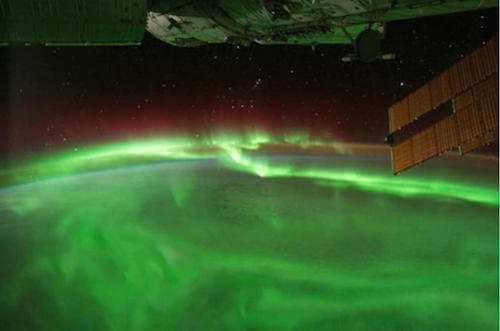
ORLANDO, Florida - The NOAA Space Weather Prediction Center confirmed an S4 radiation storm—the strongest since October 2003—triggered by an X1.95 flare from sunspot region 4341, followed by a fast coronal mass ejection that sparked G4 geomagnetic conditions starting Monday afternoon around 2:38 p.m. EST. G4 (Severe) storm conditions first reached at 1938 UTC (2:38pm EST) upon CME shock arrival. Please continue to visit https://t.co/TV7Yw6Lq1Y for the latest information and updates. pic.twitter.com/rXtthPmP9C — NOAA Space Weather Prediction Center (@NWSSWPC) January 19, 2026 SWPC Video Update from Shawn Dahl, SWPC Service Coordinator about the severe G4 and S4 ongoing storms. Apologies for the hastiness of this, but we have been very busy notifying aviation, power grid, FEMA, and more about these storms. Stay aware at https://t.co/TV7Yw6Lq1Y pic.twitter.com/rT0iNTng4B — NOAA Space Weather Prediction Center (@NWSSWPC) January 19, 2026 Astronauts on the International Space Station are sheltering in shielded areas, while satellites and high-altitude flights face radiation risks, ABC News reports, though no power grid issues have appeared. [caption id="attachment_10129" align="aligncenter" width="800"] NOAA Space Weather Prediction Center Aurora Bourealis forecast map January 19. 2026.[/caption] Skywatchers from northern U.S. states to Alabama and Florida can spot vibrant northern lights tonight, best away from city lights after dark, according to Forbes. An S4 severe solar radiation storm is now in progress - this is the largest solar radiation storm in over 20 years. The last time S4 levels were observed was in October, 2003. Potential effects are mainly limited to space launch, aviation, and satellite operations. pic.twitter.com/kCjHj4XYzB — NOAA Space Weather Prediction Center (@NWSSWPC) January 19, 2026